
Enterprise SaaS для отделов маркетинга и коммуникаций крупных корпораций в Европе. Среди клиентов 7 компаний из индекса DAX, включая Deutsche Bahn, Merck и Commerzbank. Процессы, дизайн-система, продуктовый опыт.

Платформа для управления контентом. Клиенты: крупные корпорации с распределёнными отделами, жёсткими редакционными процессами и высокими требованиями к согласованию.
Продукт решал реальные задачи, но UI был собран разными руками в разное время и на стыках это было заметно.
Не было и процессов. Ни дизайн-системы, ни хэндоффа между дизайном и разработкой, ни единого источника истины. Я пришёл как первый штатный дизайнер и предстояло заняться не только продуктом, но и выстроить эти процессы.
Первые два месяца ушли на процессы. Разобрался, как устроен текущий хэндофф, нашёл пробелы, ввёл структурированные спеки и контрольные точки.
Раньше стандартом был Sketch в связке с Zeplin и InVision: отдельный инструмент для дизайна, отдельный для хэндоффа, отдельный для прототипов. Позже переехали на Figma: одно рабочее пространство для всего, и никаких файлов, которые нужно синхронизировать между собой.
Вынесли токены (цвет, типографику, отступы) за пределы дизайн-файла и связали их с фронтендом. Дизайнер и разработчик работали с одним словарём без ручного переноса и расхождений при интерпретации.
Поверх токенов выросла библиотека компонентов: ~60 элементов с паттернами взаимодействия, от полей ввода до таблиц, воркфлоу и модальных окон.
Вместе с командой внедрили Storybook как общий источник истины между дизайном и продакшн-кодом. Это было не быстро, окупилось на каждом следующем модуле.
Ранний Scompler встречал нового пользователя пустым рабочим пространством: три настройки подряд до первой полезной операции, и ни одна не давала немедленной ценности. Логично для итогового состояния, но требует усилий ровно в тот момент, когда новому пользователю ещё нечем себя мотивировать.
Развернул порядок. Первое действие — создать одну публикацию в редакционном календаре, без единой предварительной настройки. Остальное открывалось дальше, по мере того как реально требовалось.
Ставил на то, что активацию определяет время до первой ценности, а не полнота первичного сетапа. Когортное сравнение до/после: +40% активации в первые 14 дней (окна по 90 дней, продуктовая аналитика).
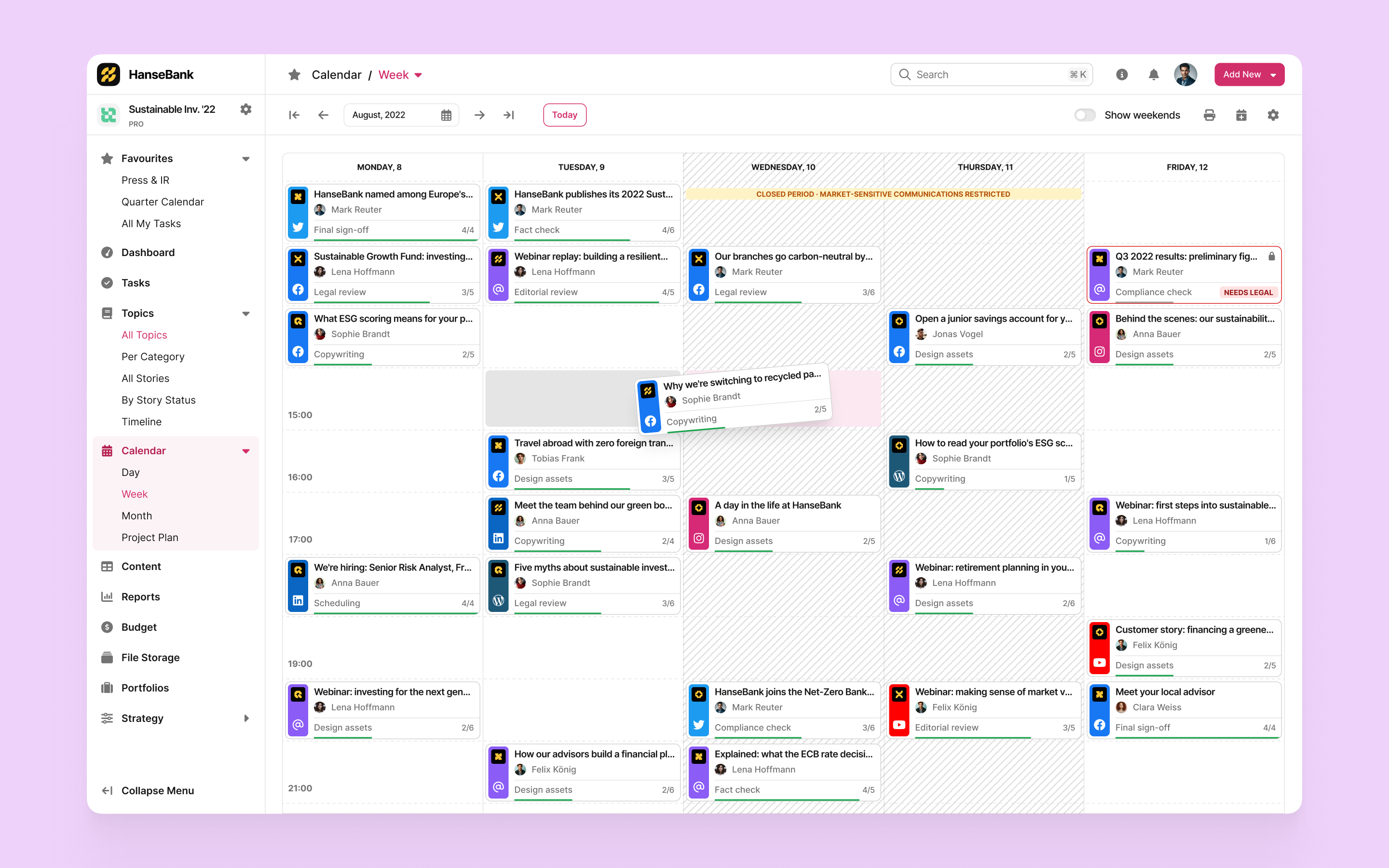
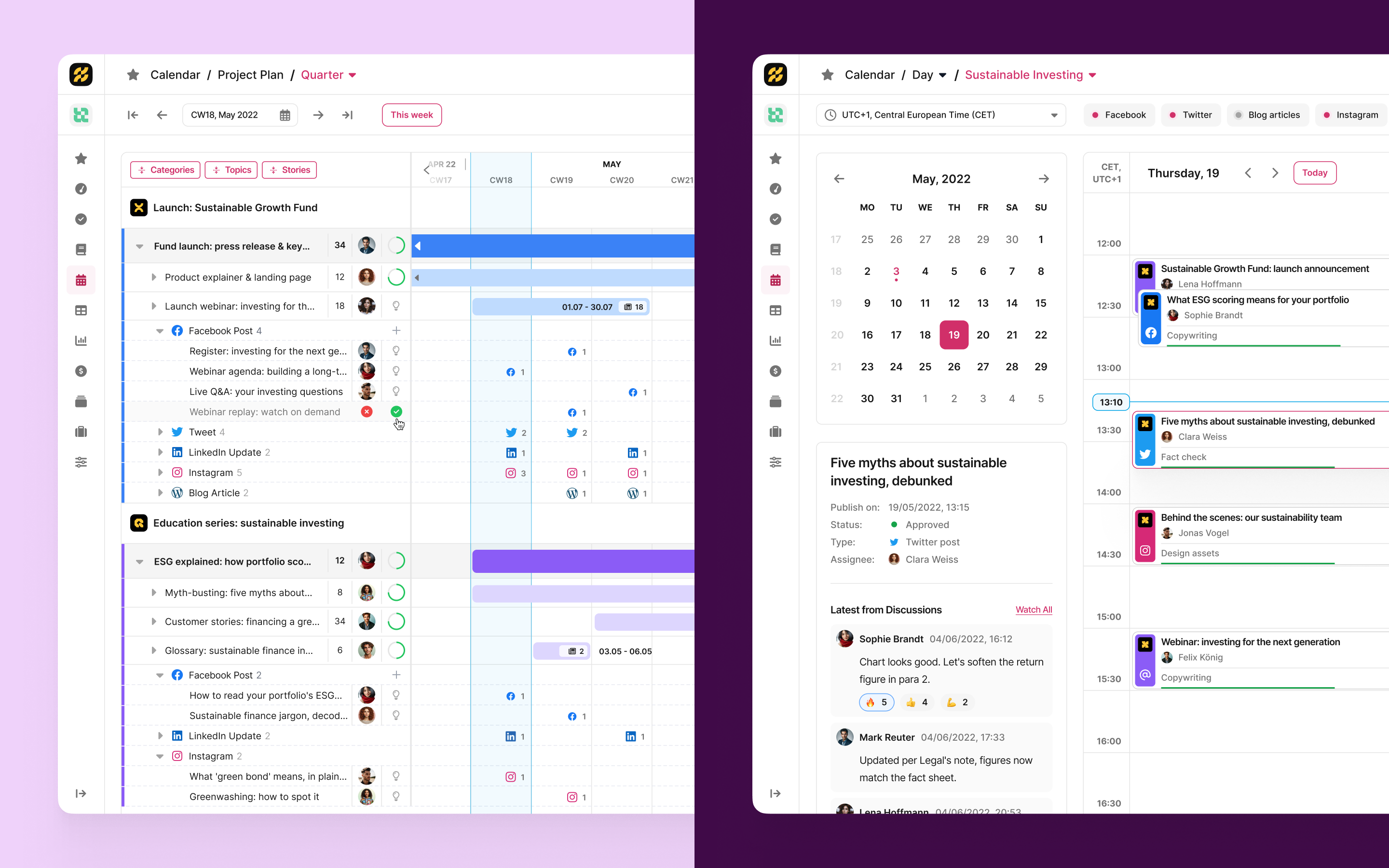
Календарь публикаций — центр продукта. Все материалы по каналам в одном пространстве, с цветовой кодировкой по типу и статусу. Менеджер видит загрузку команды и пробелы в графике с одного взгляда. Для квартального планирования есть отдельный режим со списком тем, зависимостями и таймлайном.
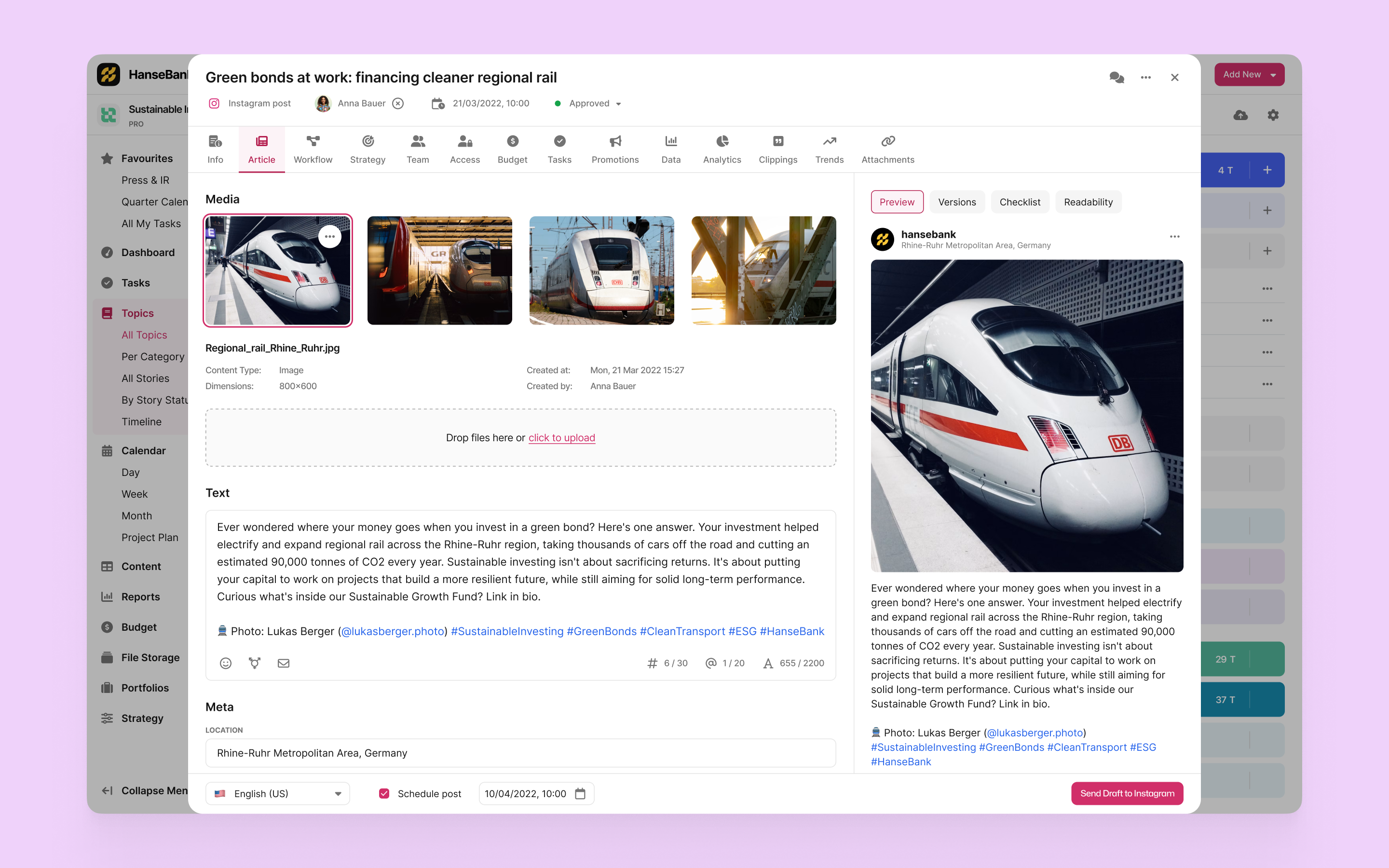
Редактор публикации показывает финальный вид прямо в процессе работы. Поля под канал, медиабиблиотека, мета-данные — слева, превью того, что увидит подписчик — справа. Изменения видны сразу, а не после публикации.
Enterprise-покупатели не хотят ещё один инструмент, они хотят, чтобы существующий стек работал лучше. Было решено интегрироваться с SharePoint и Staffbase, чтобы встроиться в них. Scompler стал средой подготовки и согласования контента, который затем публиковался в привычной платформе.
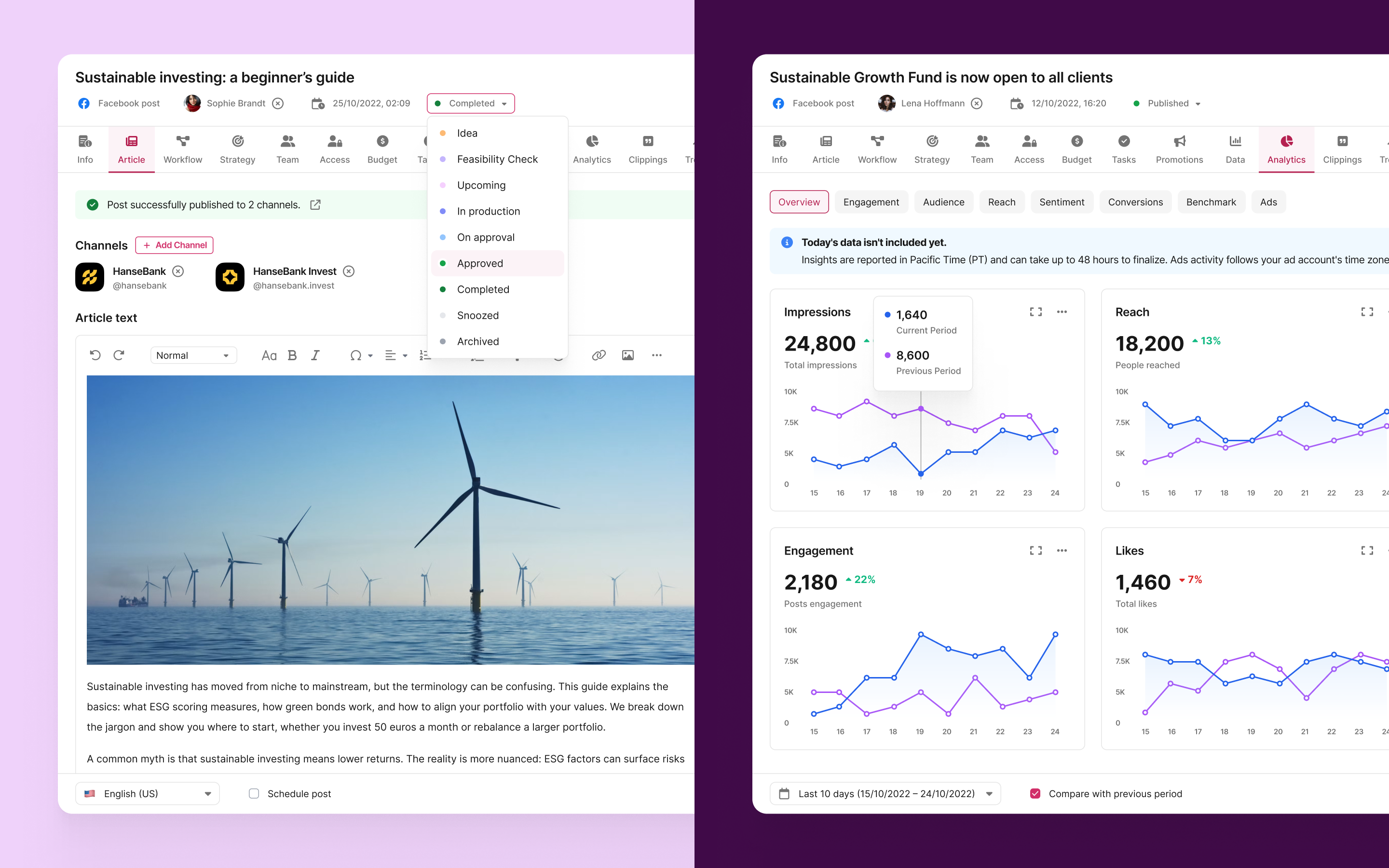
Кастомные воркфлоу согласования настраиваются под тип контента: чем чувствительнее материал, тем больше шагов проверки. Аналитика охватов по каналам показывает, что работает и где: сравнение периодов, тренды, ключевые метрики на одном экране. В 2021–2022, когда сейлз-команда вышла на Commerzbank, именно эти модули стали центром питча: банку нужен был жёсткий контроль над внешними коммуникациями. В итоге контракт был подписан.
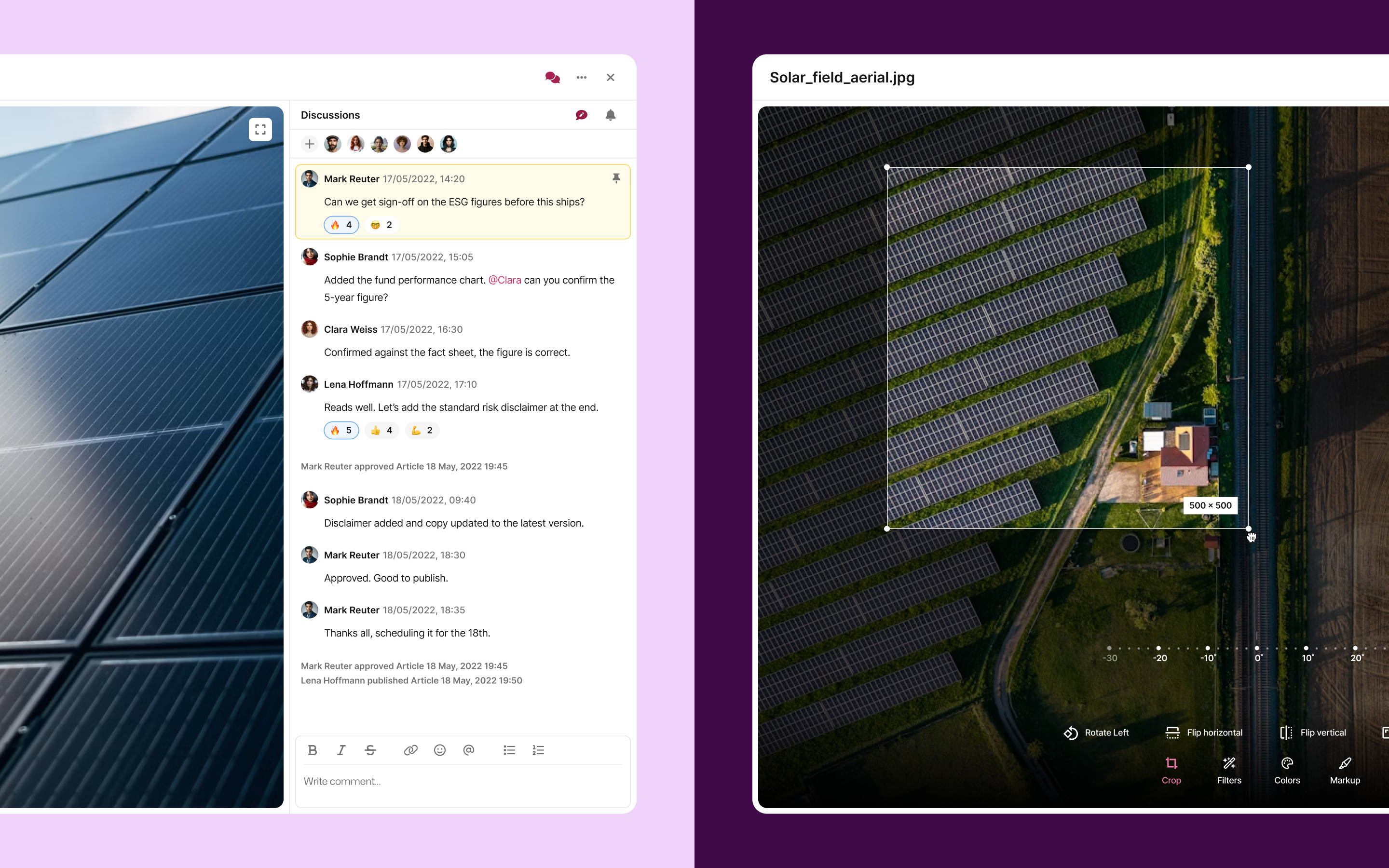
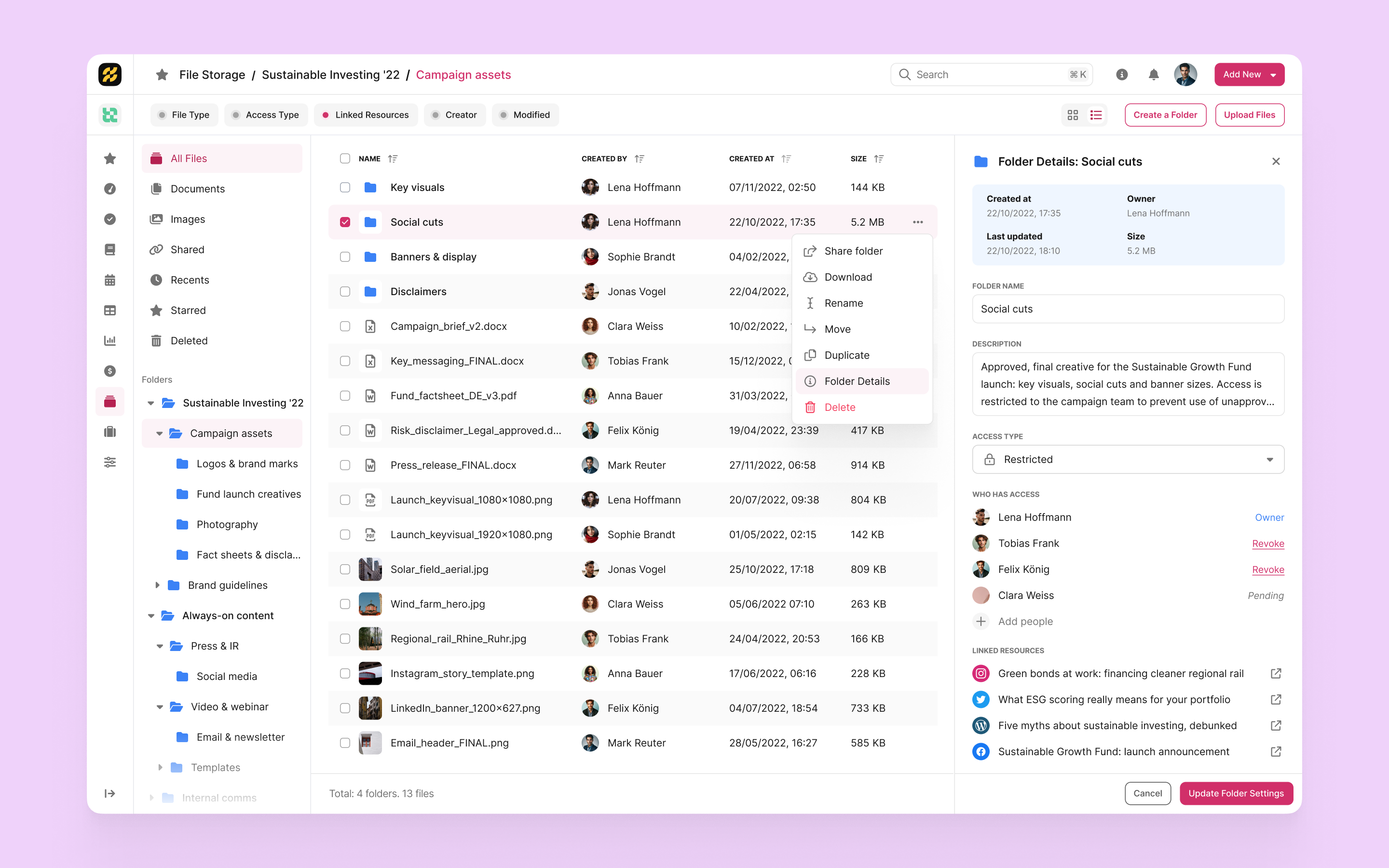
File Storage хранит ассеты с гранулярными правами доступа: папки, теги, связи между ресурсами и публикациями. Обсуждения и редактор изображений встроены в продукт — команда правит и согласовывает контент без переключения на сторонние инструменты.
Disclaimer: Все показатели являются приблизительными и округлены для удобства восприятия. Точные цифры конфиденциальны и защищены соглашением о неразглашении.
В Scompler я впервые работал в продукте, у которого уже была история, аудитория и кодовая база. Это другая дисциплина, чем проектирование с пустого листа: каждое решение встраивается в существующее и конкурирует с тем, что было до тебя.
Время, потраченное на процессы и систему, окупается на каждом следующем модуле. Без них каждый следующий модуль добавляет расхождение, а не целостность.
Raphael consistently demonstrated solid design skills and a strong ability to comprehend user requirements. His knowledge in UI/UX design, combined with his attention to detail, made him a reliable member of our team. His capacity to produce user-friendly and pleasing interfaces enabled the delivery of quality work.

Enterprise SaaS for marketing and communications teams at large European corporations. Clients include seven DAX-index companies: Deutsche Bahn, Merck, Commerzbank. Processes, design system, product experience.
A content management platform. Clients: large corporations with distributed departments, strict editorial processes, and high approval requirements.
The product solved real problems, but the UI was assembled by different hands at different times — and the seams showed.
There were no processes either. No design system, no handoff between design and development, no single source of truth. I came in as the first in-house designer, and the job was not just to work on the product but to build the way of working that didn't yet exist.
The first two months went into processes. Mapped the existing handoff, found the gaps, introduced structured specs and review checkpoints.
The old standard was Sketch paired with Zeplin and InVision: one tool for design, another for handoff, another for prototypes. Moving to Figma wasn't trend-chasing — it meant one shared workspace for everything, with no files to keep in sync.
We moved tokens — color, typography, spacing — out of the design file and connected them directly to the frontend. Designer and developer worked from the same vocabulary: no manual transfers, no interpretation gaps.
On top of the tokens, a component library grew: ~60 elements with interaction patterns, from input fields to tables, workflows, and modals.
Together with the team, we implemented Storybook as a shared source of truth between design and production code. It was slow to set up. It paid off on every module that followed.
Early Scompler greeted new users with an empty workspace: three setup steps before the first useful action, none of which delivered immediate value. Classic setup-first: configure everything, then get value. Sensible for a mature state, but it demands effort at exactly the moment when a new user has nothing to motivate them yet.
Reversed the order. The first action: create one publication in the editorial calendar, no prior setup required. Everything else opened up as it was actually needed. The bet: activation is determined by time-to-first-value, not the completeness of the initial setup. The tradeoff I accepted — a less "complete" starting state, in exchange for people reaching value before they leave.
Cohort comparison before/after: +40% activation in the first 14 days (90-day windows, product analytics).
The publication calendar is the center of the product. All content across channels in one space, color-coded by type and status. A manager can read team load and schedule gaps at a glance. For quarterly planning, there's a separate mode with topic lists, dependencies, and a timeline.
The publication editor shows the final view as you work. Channel fields, media library, metadata on the left — a live preview of what the subscriber will see on the right. Changes are visible immediately, before publishing.
Enterprise buyers don't want another tool — they want their existing stack to work better together. Integrations with SharePoint and Staffbase were a strategic bet: not to replace familiar platforms, but to fit into them. Scompler became the environment for preparing and approving content that was then published in the platforms teams already used.
Custom approval workflows are configured by content type: the more sensitive the material, the more review steps. Channel reach analytics shows what's working and where: period comparisons, trends, key metrics on one screen. When the sales team approached Commerzbank, these modules became the center of the pitch: the bank needed strict control over external communications. The contract was signed.
File Storage keeps assets organized with granular access control: folders, tags, and links between resources and publications. Discussions and an image editor are built into the product — the team edits and approves content without switching to external tools.
Disclaimer: All metrics are approximate and rounded for readability. Exact figures are confidential and covered by NDA.
At Scompler, I worked for the first time in a product that already had a history, an audience, and a codebase. It's a different discipline than designing from a blank slate: every decision has to fit into what exists and compete with what came before.
Time spent on processes and the system pays off on every module that follows. Without them, each new module adds divergence rather than coherence.
Raphael consistently demonstrated solid design skills and a strong ability to comprehend user requirements. His knowledge in UI/UX design, combined with his attention to detail, made him a reliable member of our team. His capacity to produce user-friendly and pleasing interfaces enabled the delivery of quality work.
